Research
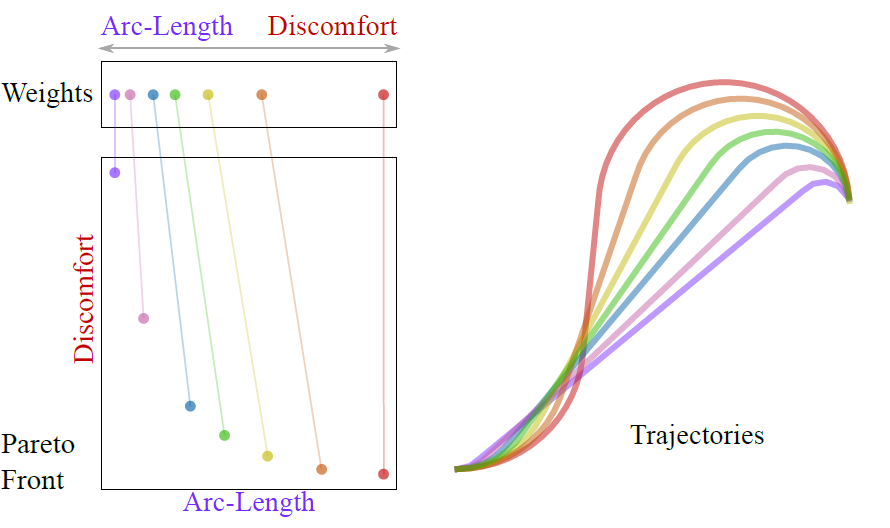
Multi-Objective Planning in Robotics
Many problems in robotics seek to simultaneously optimize several competing objectives such as length, risk, and social acceptability of robot paths. We study different methods for scalarization of multi-objective problems such as the conventional approach is using a weighted sum of the individual objectives. Leveraging theoretical properties of different scalarizations, we develop planning methods for a wide range of robotic problems that are tunable to attain any Pareto optimal trade-off, as well as algorithms to identify relevant choices of weights to efficiently approximate Pareto frontiers.
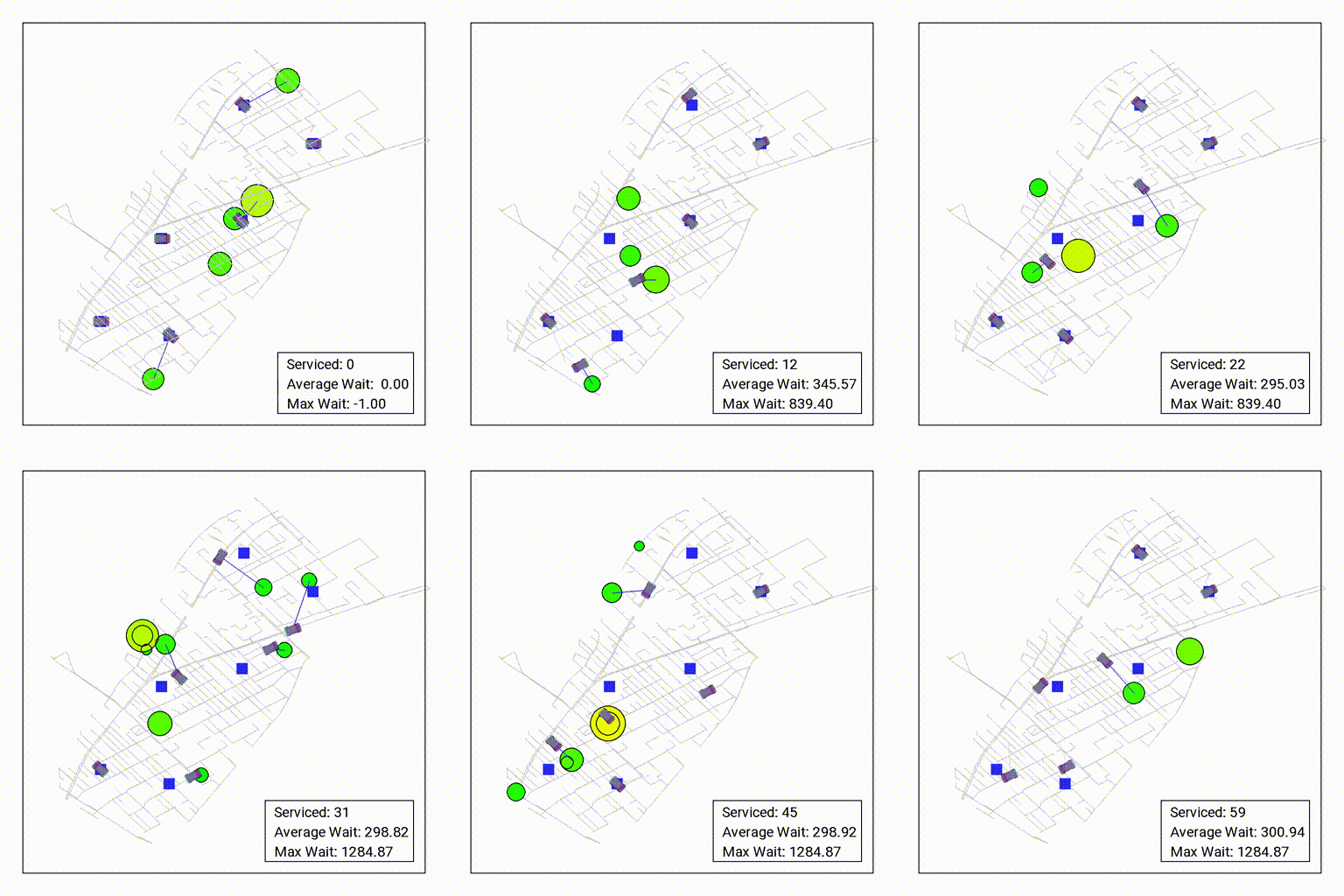
Multi-robot Task Assignment and Pickup & Delivery
Efficient service and logistics operations commonly require coordinated fleets of robots. Requests and tasks often appear dynamically and need to be allocated to an available robot, which then needs to include the new task within its current plan or route. Our work includes task assignment in dynamic and uncertain environments, coordination of heterogeneous fleets, and task assignment and vehicle routing under complex and multiple objectives.
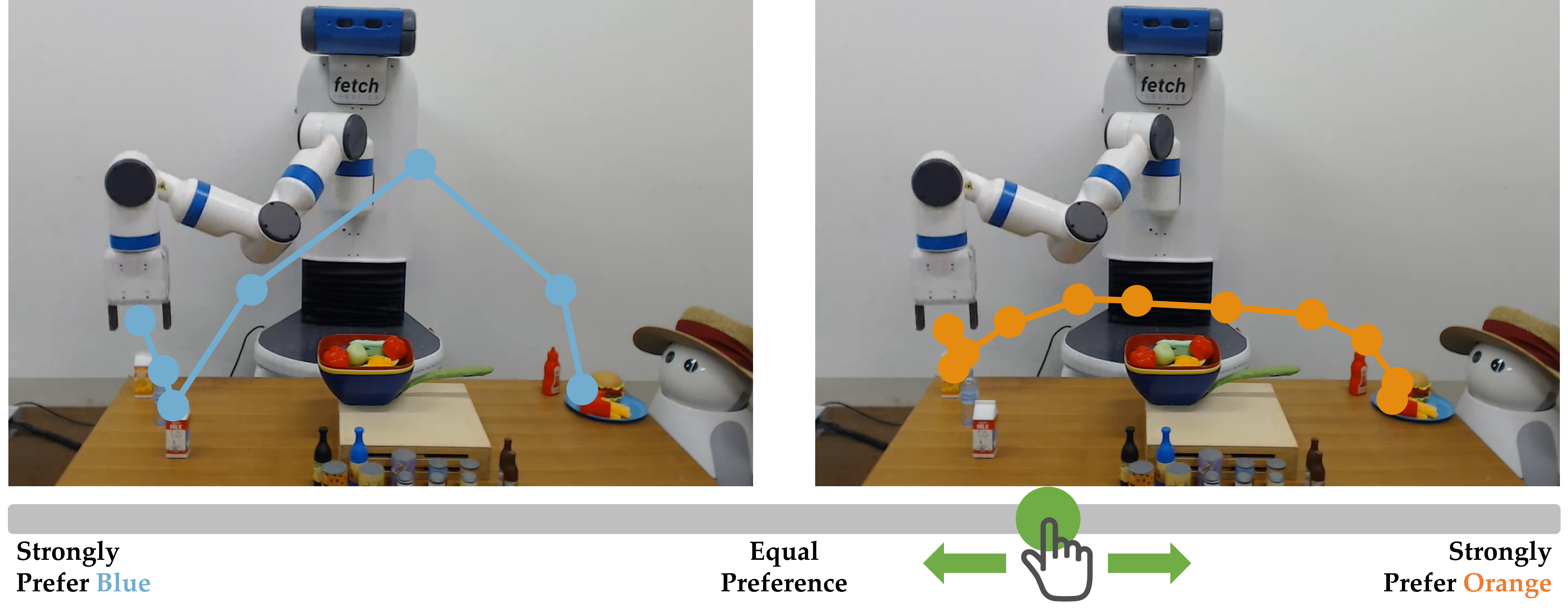
Active Preference Learning
An important challenge in human robot interaction (HRI) is enabling non-expert users to specify complex tasks for autonomous robots. We study interactive frameworks based on preference learning: Such frameworks repeatably show alternative robot plans to users to convey attainable solutions. Users choose between pairs of alternatives, allowing for the robot to learn a parametric model of the user’s underlying preferences.